From First Call to Launch Every Step, Explained
How Mobizio runs real client projects: a transparent, seven-phase framework with sprint demos, a fixed communication cadence, and milestone sign-offs from discovery to post-launch support.
Why Most Software Projects Fail Clients, and What We Do Differently
Studies show 70% of software projects overrun their budget or timeline. The root cause is almost never technical, it's communication breakdown, unclear requirements, and clients kept in the dark until it's too late to change course.
✕ "We didn't know it was off-track until month 4."
✓ We share progress every 2 days, not every 4 months.
✕ "The final product wasn't what we asked for."
✓ We demo working software every sprint. You see it before it's final.
✕ "No one explained the technical decisions to us."
✓ Every architecture choice is explained in plain English with a rationale.
✕ "They disappeared after launch."
✓ 30-day warranty + monthly reviews + priority SLA. We stay.

7 Phases. Zero Surprises.
Every project follows this framework, adapted to your industry and scale, never skipped.

First Contact & Discovery Call
The moment you reach out, a real senior engineer, not a sales rep, picks up the conversation. We spend 30 minutes understanding your business context, not just your feature list.
- Free 30-minute strategy session with a senior engineer
- Honest feasibility assessment, including what NOT to build
- Signed NDA before any sensitive details are shared
- Initial technology recommendations based on your goals
- We document the full business context, not just features
- We identify the core problem vs. the stated solution
- We flag technical risks and regulatory requirements early
- We align on budget range and timeline expectations honestly

Deep Requirements & Project Proposal
We don't send a generic quote. We go deep with stakeholder interviews, workflow mapping, and architecture planning before we write a single word of the proposal.
- Detailed Scope of Work (SOW) with no hidden clauses
- Wireframes or flow diagrams for key user journeys
- Technology stack recommendation with rationale
- Phased delivery plan with milestone-based payments
- Requirements workshop with all stakeholders (2-3 sessions)
- Technical architecture draft reviewed by senior architect
- Risk register: what could go wrong and how we'll handle it
- Team composition recommendation based on project needs

Team Assignment & Project Kickoff
Once the SOW is signed, you meet your dedicated team, not a staffing rotation. The same engineers who scoped the project build it. A structured kickoff session aligns everyone before development begins.
- Named team: lead engineer, backend, frontend, QA, PM
- Shared project workspace (Jira board, Slack channel, GitHub)
- Communication charter: who to contact for what, response SLAs
- Sprint 1 plan reviewed and agreed with client before coding starts
- Team onboarding: full project context shared with every engineer
- Dev environment setup, repo structure, CI/CD pipeline scaffolded
- Coding standards, PR review process, and branching strategy agreed
- Definition of Done established and shared with client

Sprint-Based Development with Full Transparency
We build in 2-week sprints. Every sprint ends with a live demo. Clients see real working software every 14 days, not a PowerPoint update.
- Live sprint demo every 2 weeks: real software, not slides
- Weekly async video update (Loom) from the PM every Friday
- Real-time Jira board: see every ticket, status, and blocker
- Daily standup notes shared in Slack (blockers surfaced immediately)
- Sprint planning: tickets estimated, prioritized, and committed
- Daily standup: 15 min covering what's done, what's next, any blockers
- PR review policy: no code merged without at least 1 peer review
- Mid-sprint check-in with client PM if any scope questions arise
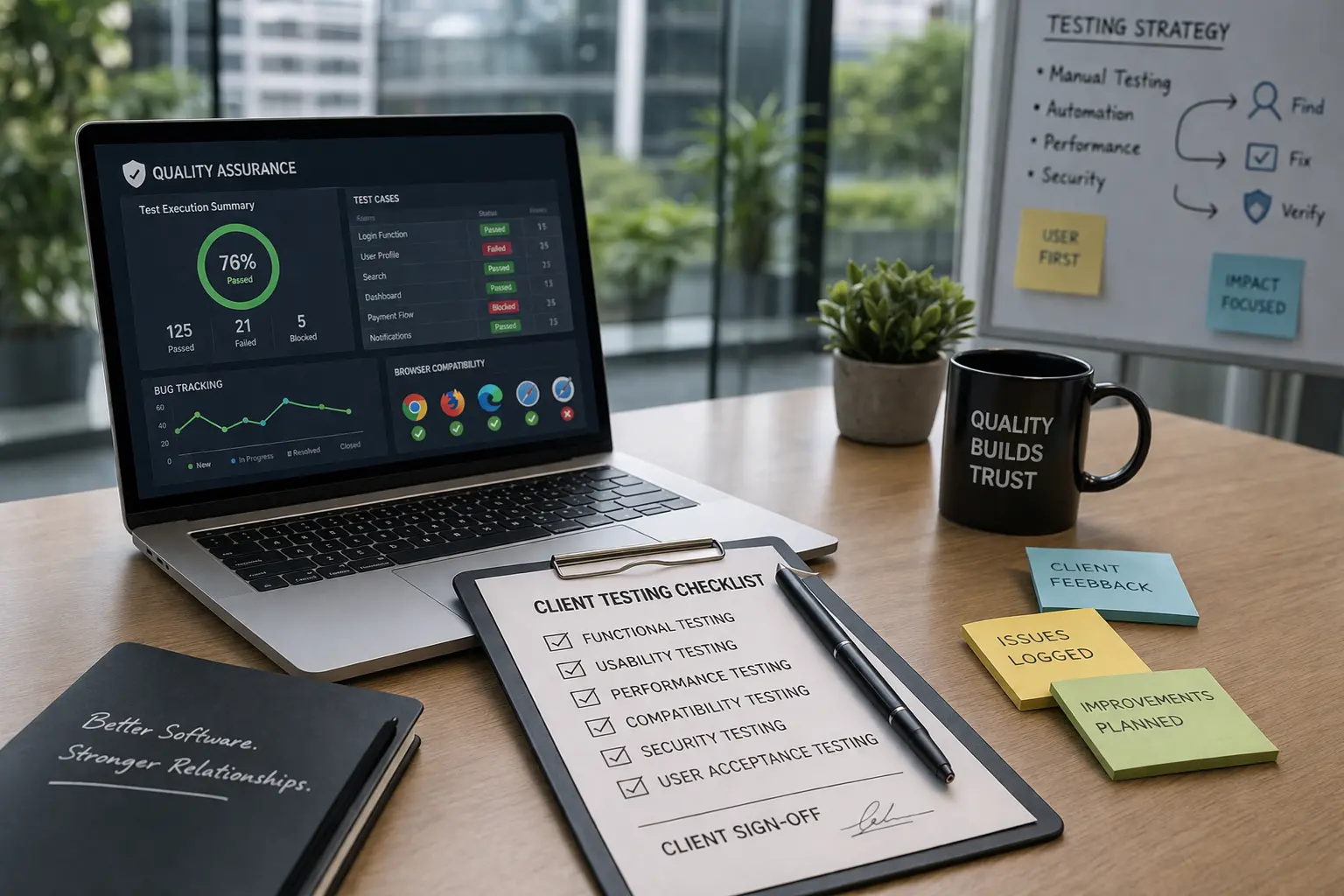
Quality Assurance & Client Testing
QA isn't a phase at the end. It runs in parallel with every sprint. Clients get a staging environment they can test freely at any time.
- Dedicated staging environment, always up-to-date with latest build
- Test cases and expected behaviors documented in plain language
- UAT (User Acceptance Testing) period with structured feedback process
- Bug tracker open to client: log issues directly, see fixes in real time
- Automated test suite (unit + integration) run on every pull request
- Manual QA by a dedicated QA engineer before staging deploy
- Regression testing after every bug fix, nothing breaks what's working
- Performance and security scan before every major milestone sign-off
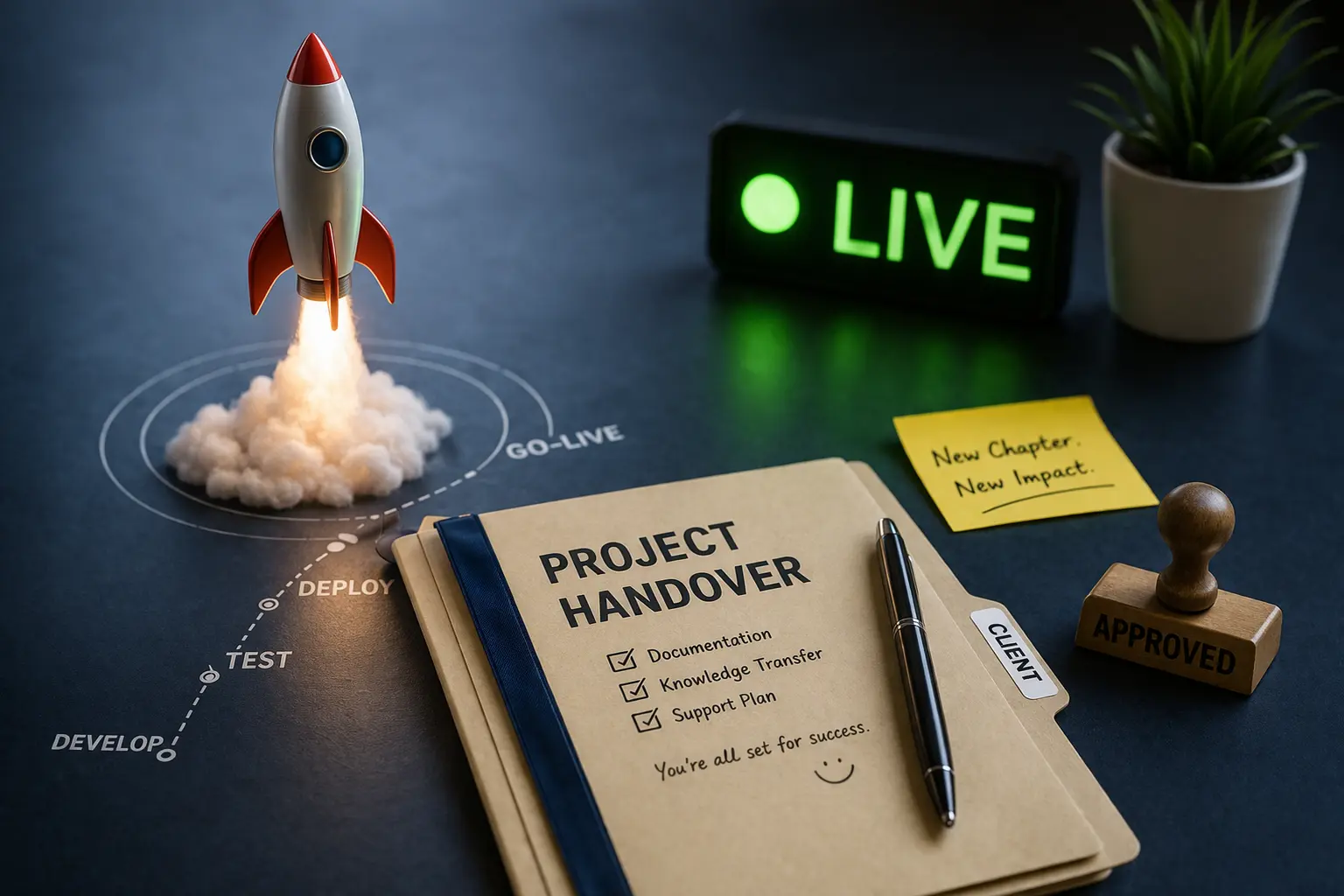
Deployment, Handover & Go-Live
Launch is a controlled event, not a moment of crossed fingers. We deploy with rollback plans, monitor every metric in real time, and stay on call for the first 48 hours.
- Production deployment with zero-downtime strategy
- Full technical handover documentation (architecture, APIs, runbooks)
- Admin training session for client's internal team
- 48-hour hyper-care period: team on call for any issue
- Pre-launch checklist: security scan, load test, backup verified
- Blue-green or canary deployment strategy to minimize risk
- Real-time monitoring dashboards (Datadog/Grafana) configured
- Rollback procedure documented and tested before go-live
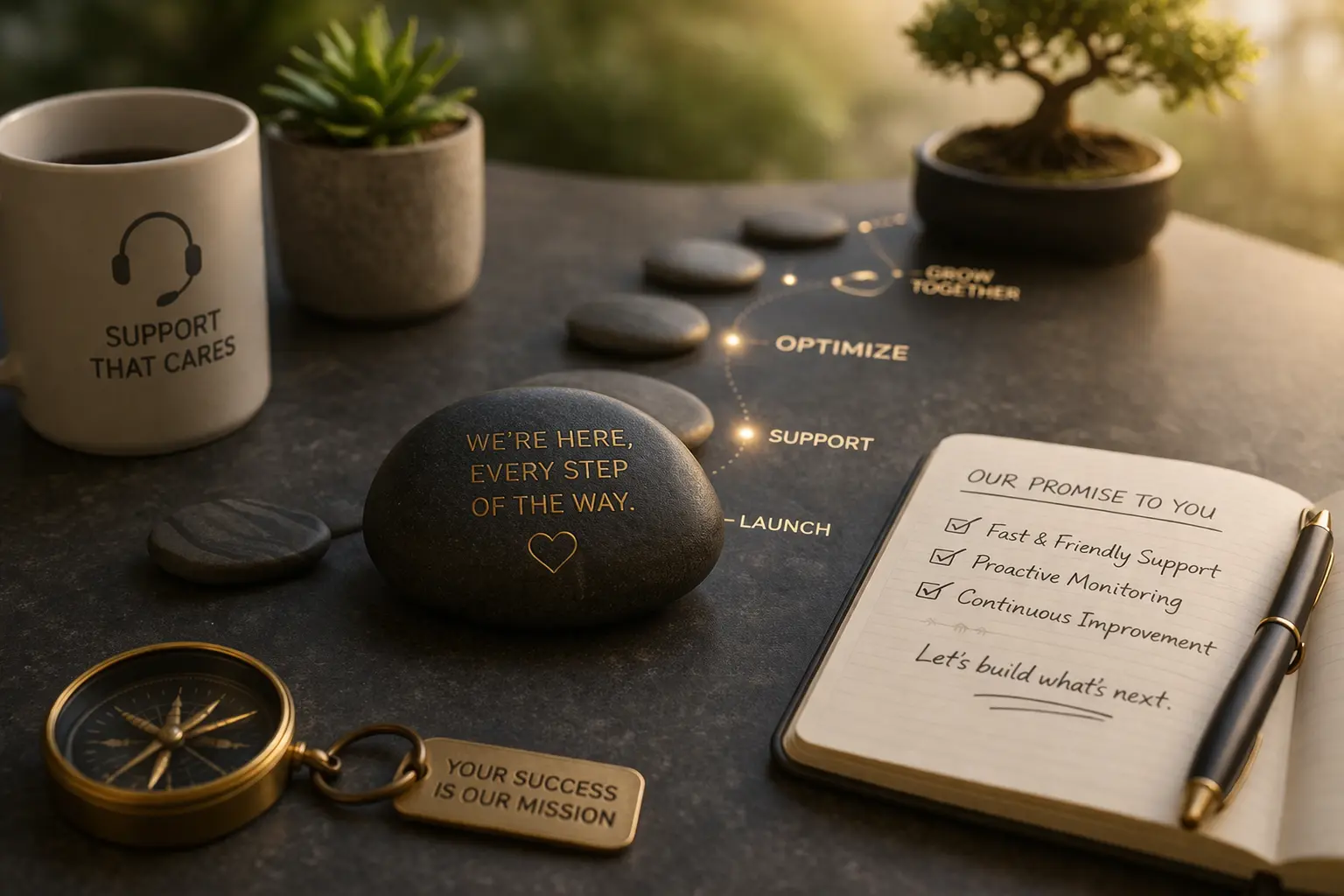
Post-Launch Support & Ongoing Partnership
We don't disappear after launch. Every client gets a 30-day warranty period and a named point of contact for anything that comes up.
- 30-day free warranty: all bugs fixed, no questions asked
- Monthly performance review report (uptime, speed, errors)
- Roadmap session: what to build next based on real usage data
- Priority support SLA: critical issues responded to within 2 hours
- Post-launch retrospective: what we'd do differently
- Production monitoring alerts configured with escalation paths
- Codebase health review: refactoring opportunities flagged
- Client success check-in at 30 and 90 days post-launch
You get a live Jira board on every project
Real-time access to the same board our engineers use, no status-update theatre.
Sprint 47 (active)
2-week sprint · updated in real time
Incomplete
1Refactor onboarding flow for new auth provider
In Progress
1Add offline caching for list views
In Review
0Production Ready
7Optimize image upload pipeline
Fix crash on empty search results
Add pull-to-refresh on dashboard
Done
543Migrate API client to typed SDK
Resolve memory leak in media player
Improve cold-start load time
You're Never Left Wondering
Here's exactly how often you hear from us and what that communication contains.
- Standup notes posted in Slack by 10am
- Any blocker flagged immediately, never buried
- PR reviews completed within same business day
- Friday Loom video update from PM (5-8 min)
- Sprint progress vs. plan: honest, not polished
- Upcoming week preview: what's being worked on
- Live sprint demo: real working software
- Sprint retrospective: what improved this cycle
- Next sprint planning with client input on priorities
- Project health report: budget, timeline, quality
- Risk register reviewed and updated
- Strategic roadmap discussion for what's next
Blockers are never hidden.
If something is at risk, whether a timeline, a technical assumption, or a dependency, we tell you the same day. Not in the next sprint review. Not in a polished report three weeks later. The same day.
 JavaScript
 TypeScript
 Python
 Kotlin
 Swift
Swift Go
Go React
React Next.js
 Node.js
 Flutter
 PostgreSQL
 MongoDB
 Redis
Redis MySQL
MySQL AWS
AWS Azure
Azure Docker
 Kubernetes
 OpenAI
 Claude
 Gemini
 GitHub
 Figma
Figma GraphQL
 Tailwind
 Laravel
 Xcode
Xcode Unity
Unity Express
 .Net
.Net FireBaseJavaScriptTypeScriptPythonKotlinSwiftGoReactNext.jsNode.jsFlutterPostgreSQLMongoDBRedisMySQLAWSAzureDockerKubernetesOpenAIClaudeGeminiGitHubFigmaGraphQLTailwindLaravelXcodeUnityExpress.NetFireBase
No Code Merges Without Review
Every pull request requires at least one peer review and passes automated tests before it can be merged. No exceptions.
CI/CD From Day One
Continuous integration and deployment pipelines are set up in the first week. Every commit is automatically tested and deployed to staging.
Milestone Sign-Off Before Proceeding
We don't proceed to the next phase until you've reviewed and approved the current one. Your sign-off is the gate, not an internal deadline.
Requirements Change. Here's How We Handle It Without Drama.
No project survives contact with reality unchanged. Requirements evolve, priorities shift, and good ideas emerge mid-build. We've built a change management process that handles this cleanly, without scope creep, surprise invoices, or finger-pointing.
Questions Clients Ask Before Signing
How involved do I need to be during development?
As involved as you want to be, but a minimum of 2-3 hours per week is needed for sprint demos and approvals. Most clients say it's the most productive 3 hours of their week because they're seeing real progress.
What happens if the project runs over timeline?
If it's due to scope changes, we follow the change management process: a CR is raised and the timeline is adjusted transparently. If it's due to our estimation error, we absorb the cost. We've never delivered a project more than 2 weeks late without prior client notification.
Do I own the code?
Yes, 100%. Full IP transfer is included in every contract. The moment you pay a milestone, the code delivered as part of that milestone is yours. Full source code, documentation, and credentials handed over at project end.
Can I see who's working on my project?
Yes. You get named team members, their LinkedIn profiles, and direct access to them in Slack. You're not managed through a single point of contact, you can talk to the engineer building your feature directly.
What if I need to change technology mid-project?
It depends on how far along we are. Early phase, it's usually manageable with a minor schedule impact. Mid-project, we'll assess honestly and show you the trade-offs. We'll never recommend a technology change just to create more work, we flag it when it genuinely matters.
Do you sign NDAs?
Yes, before any sensitive information is shared, typically at the first or second conversation. We have a standard NDA, or we'll review yours. This is never negotiable for us either way.
Got a Project Idea?
Collaborate with Mobizio's expert teams to deliver scalable, user-focused digital experiences.